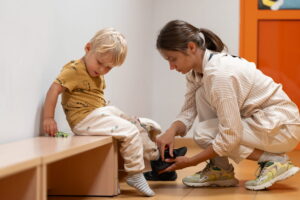

April is Autism Acceptance Month—a time to move beyond awareness and focus on understanding, inclusion, and meaningful support. For families, that journey begins at home.
Autism acceptance isn’t about lowering expectations. It’s about recognizing your child’s unique strengths, supporting their challenges, and creating an environment where they can grow with confidence.
What Autism Acceptance Really Means
Acceptance goes beyond acknowledging a diagnosis. It means:
- Understanding your child’s perspective
- Supporting how they communicate and interact
- Celebrating progress—big and small
Research shows that supportive home environments play a critical role in developmental outcomes for children with autism.
Create a Predictable, Supportive Environment
Children with autism often thrive with structure. Consistency helps reduce anxiety and builds confidence.
Practical ways to do this:
- Keep daily routines consistent
- Use visual schedules or charts
- Prepare your child for transitions in advance
Even small adjustments can make everyday life feel more manageable.
Support Communication in All Forms
Not every child communicates the same way—and that’s okay.
You can support communication by:
- Encouraging verbal language, gestures, or sign language
- Using visual supports or communication devices
- Giving your child time to respond without pressure
The goal isn’t perfection—it’s connection.
Focus on Strengths, Not Just Challenges
Every child has unique abilities. Acceptance means recognizing and building on those strengths.
Try this approach:
- Notice what your child enjoys and does well
- Incorporate those interests into learning and play
- Celebrate progress instead of comparing to others
This builds confidence and encourages continued growth.
Build Sensory-Friendly Spaces at Home
Many children with autism experience sensory sensitivities. Creating a calming space can make a big difference.
Ideas include:
- A quiet corner with soft lighting
- Weighted blankets or sensory tools
- Noise-reducing headphones
These spaces give your child a safe place to regulate and reset.
Model Acceptance for Others
Children learn how to view themselves by watching the people around them.
You can model acceptance by:
- Speaking positively about your child’s differences
- Educating family members and friends
- Advocating for your child in school and community settings
Your voice helps shape how others respond.
Partner with the Right Support Team
Acceptance at home is powerful—but you don’t have to do it alone. Working with experienced professionals can help your child build communication, social, and life skills in a supportive environment.
According to Autism Speaks, early and consistent intervention can significantly improve long-term outcomes.
Move Forward with Confidence
Autism acceptance isn’t a one-time decision—it’s an ongoing commitment to understanding, supporting, and celebrating your child for who they are.
At Phoenix Autism Center, we work alongside families to provide comprehensive support that meets each child where they are—and helps them grow from there.
If you’re looking for guidance, structure, and a team that truly understands, we’re here to help.