
Occupational Therapy for Young Children with Autism
Building Everyday Skills for Independence, Learning, and Confidence
For young children with autism, everyday activities such as playing, eating, dressing, and interacting with their environment can feel overwhelming or difficult. Occupational therapy focuses on helping children develop the foundational skills needed to participate more comfortably and confidently in daily life. These skills include fine motor development, sensory processing, self-care routines, and the ability to engage with the world in a meaningful way. Research shows occupational therapy can improve functional independence, sensory regulation, and participation in daily activities for children with autism.
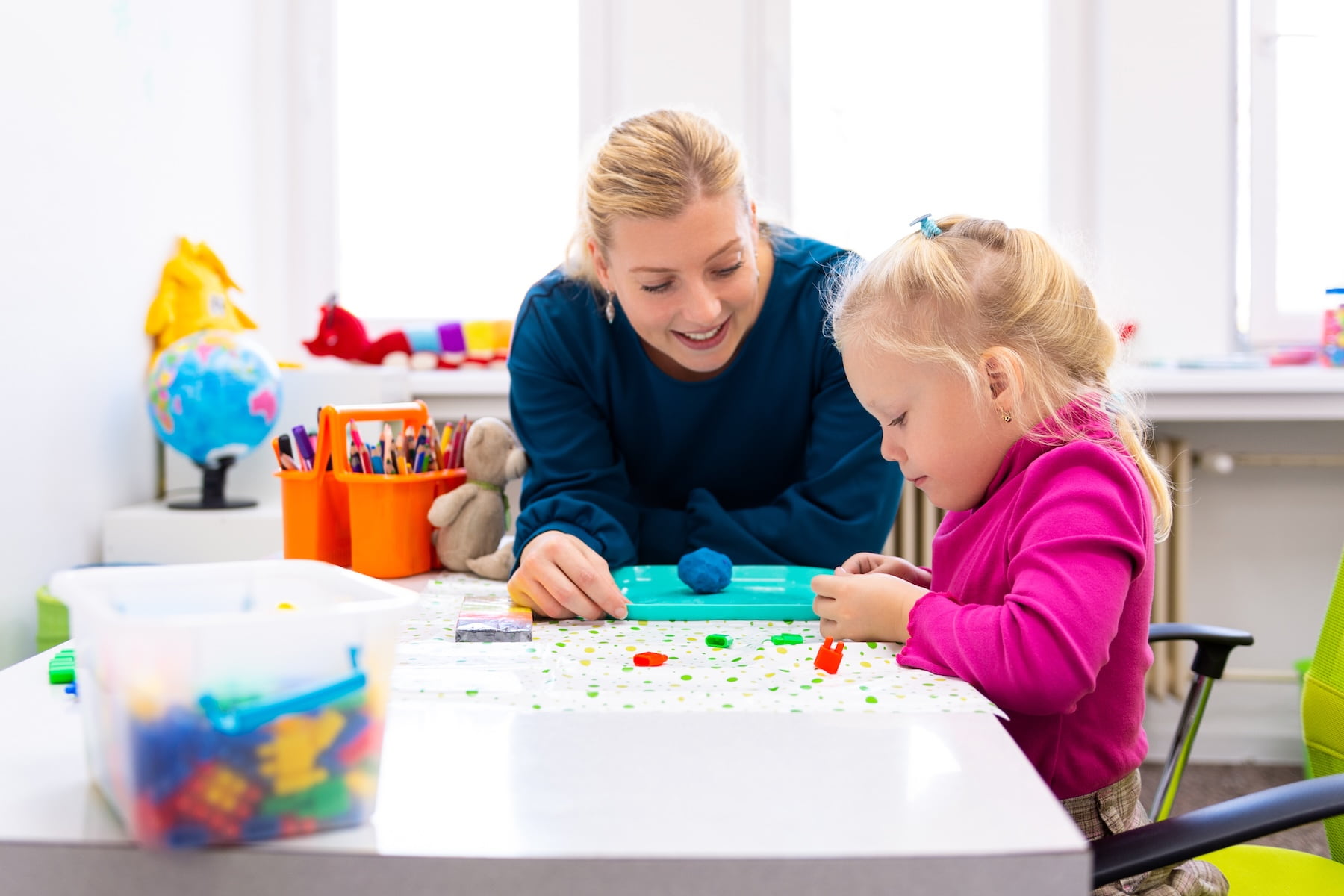
At Phoenix Autism Center, occupational therapy is integrated into each child’s individualized treatment plan. Because we specialize in early intervention for children ages 2 through 6, therapy focuses on building the core developmental skills that support long-term growth, learning, and independence.
How Occupational Therapy Supports Development
Occupational therapy is personalized to meet each child’s specific needs and developmental stage. Some children need support with sensory processing and regulation, while others are working on fine motor coordination, play skills, or daily living routines. Therapy may focus on:
- Developing fine motor skills such as grasping, stacking, drawing, and manipulating objects
- Improving sensory processing and regulation to help children feel more comfortable and focused
- Strengthening self-care skills such as feeding, dressing, and hygiene routines
- Supporting play skills and engagement with toys and activities
- Building coordination, balance, and body awareness
Therapy sessions are designed to be engaging, play-based, and structured to encourage participation and skill development in a supportive environment.
Benefits of Early Occupational Therapy
Early intervention helps children build the foundational skills needed for everyday success. Key benefits include:
- Greater Independence: Helps children participate more fully in daily routines
- Improved Sensory Regulation: Supports focus, calmness, and comfort in different environments
- Stronger Motor Skills: Builds coordination and control needed for play and learning
- Better Engagement: Encourages participation in activities and interaction with others
- School Readiness: Develops foundational skills for classroom participation and independence
These skills support not only daily living but also communication, behavior, and overall development.
Family Collaboration and Everyday Application
Progress happens most effectively when therapy extends beyond the center. Our team works closely with families to provide practical strategies that can be used at home during everyday routines such as mealtime, playtime, and transitions. Consistency across environments helps children strengthen and generalize their skills.
Regular progress reviews ensure therapy evolves alongside your child’s development, with goals adjusted as new skills emerge.
How to Get Started
Every child begins with a comprehensive evaluation to identify strengths, developmental needs, and areas for growth. From there, we create a personalized plan focused on helping your child build practical skills for everyday life.
If you would like to learn more about how occupational therapy can support your child’s development, contact Phoenix Autism Center today. Our team is here to help your child build independence, confidence, and the skills needed for long-term success.