
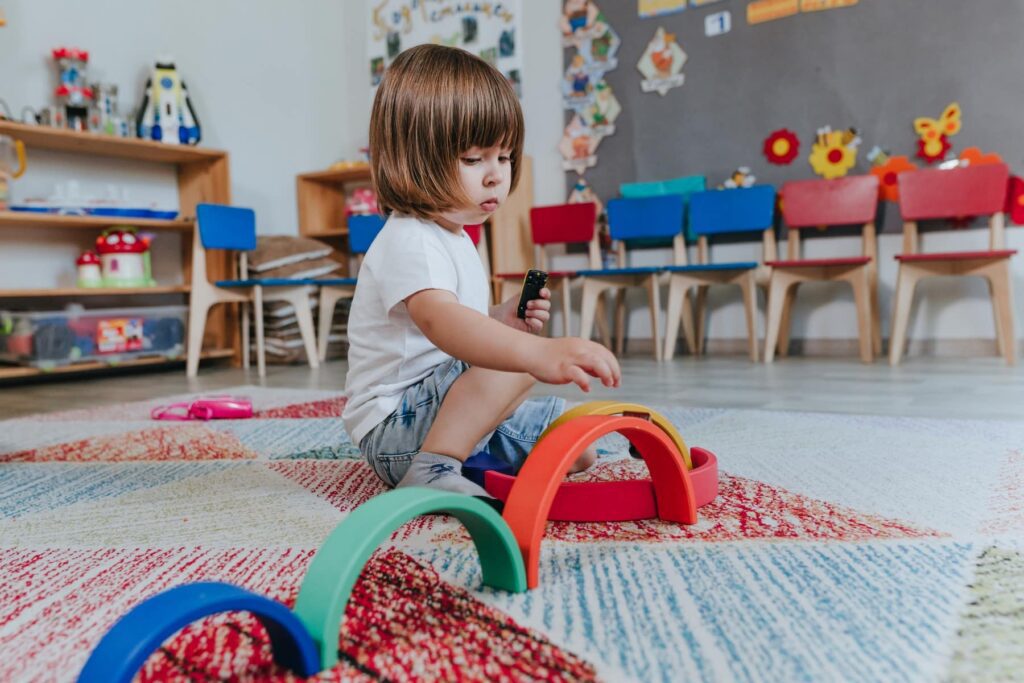
Why Play Is So Important for Children with Autism
Play isn’t just fun—it’s essential. For children with autism, play offers a powerful path for developing cognitive, social, motor, and emotional skills. It supports learning in ways structured therapy alone can’t replicate.
Why Play Matters
Research shows that structured play interventions can significantly improve communication and social interaction in children with autism. One recent study found that incorporating targeted play-based approaches led to measurable improvements in both expressive language and social skills (source).
Play creates space for natural experimentation, problem-solving, language development, and social interaction—without pressure. When children explore materials, move freely, and choose how they play, they practice essential skills at their own pace.
Phoenix Autism Center emphasizes this approach as part of early intervention. Our programs help children engage in structured and free play to build social connections, learn problem-solving and turn-taking skills, and develop emotional regulation in peer interactions.
How Play Builds Key Skills
Social interaction:
Turn-taking, sharing, and cooperative play help children decode social cues and practice responding.
Language and cognition:
Pretend play and storytelling boost vocabulary, narrative thinking, and symbolic understanding.
Motor development:
Games involving manipulation, movement, or sensory exploration support coordination and physical confidence.
Emotional regulation:
Play offers a safe outlet for expressing feelings and practicing self-control.
Tips for Engaging, Effective Play
Follow your child’s interests.
Notice what catches their attention—whether trains, art, or building—and build from there.
Add structure gently.
Introduce simple rules or prompts to support shared play: “Your turn,” “Can you show me?”, or mirror actions.
Keep it predictable.
Use consistent routines or physical cues that signal play time, like a special mat or basket for toys.
Mix sensory elements.
Include textures, sounds, visuals—think sand tables, bubble machines, or playdough—to engage different senses.
Include others.
Peer or sibling play encourages social learning. If external obstacles exist, offer guided one-on-one play instead.
When to Bring in Professionals
Play therapists and BCBAs can model effective play strategies tailored to your child’s needs and coach you on integrating them into daily routines. Coordinating with therapists ensures that home play reinforces skills targeted in structured sessions.
Ready to See How We Can Help?
Active play can transform how your child learns—even outside therapy hours. Contact Phoenix Autism Center to learn how our team supports meaningful learning through play as part of a complete treatment plan.