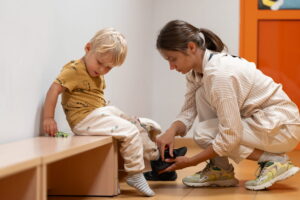

Independence Starts With Simple, Guided Moments
Independence doesn’t happen all at once—it’s built step by step through consistent practice and support. For young children with autism, structured play provides a clear, engaging way to develop the skills they need to do more on their own.
At Phoenix Autism Center, we use structured play to help children build confidence, follow routines, and gain independence in a way that feels natural and achievable.

What Is Structured Play?
Structured play is guided activity with a clear purpose and outcome. Unlike free play, it includes:
- Defined steps or expectations
- Adult guidance and support
- Opportunities for repetition
- Reinforcement of specific skills
It creates a predictable environment where children can learn and succeed.
Why Structure Helps Children Thrive
Many children with autism benefit from consistency and clear expectations. Structured play helps:
- Reduce confusion and frustration
- Improve focus and attention
- Build routine and predictability
- Encourage task completion
When children know what to expect, they are more likely to engage and participate.
According to the Autism Speaks, structured teaching approaches can support skill development and increase independence in children with autism.
How Structured Play Builds Independence
1. Breaking Tasks Into Steps
Complex skills are divided into smaller, manageable actions that children can learn one at a time.
2. Encouraging Follow-Through
Children are guided to start, continue, and complete activities—an essential part of independence.
3. Reinforcing Success
Positive reinforcement builds confidence and motivates children to try again.
4. Gradually Reducing Support
As skills improve, support is slowly decreased, allowing children to take more ownership.
Examples of Structured Play Activities
- Puzzles – Completing a puzzle step by step builds problem-solving and persistence
- Matching and Sorting Games – Strengthens focus and cognitive skills
- Simple Routines – Activities like cleaning up toys or following a sequence
- Turn-Taking Games – Encourages patience and social interaction
- Task-Based Play – Building, stacking, or completing a simple project
Each activity has a clear beginning, middle, and end—helping children understand completion.
The Role of ABA Therapy
Applied Behavior Analysis (ABA) uses structured teaching to help children learn and generalize skills. Techniques like:
- Discrete Trial Training (DTT)
- Task analysis
- Prompting and fading
ensure that children not only learn skills but can use them independently over time.
Supporting Independence at Home
Parents can reinforce structured play by:
- Setting up simple, repeatable activities
- Giving clear, consistent instructions
- Allowing time for the child to complete tasks
- Praising effort and completion
- Gradually stepping back as skills improve
Small, consistent efforts at home can lead to meaningful independence.
Building Confidence Through Consistency
Independence is built through practice, encouragement, and repetition. Structured play gives children the framework they need to learn, succeed, and grow more confident in their abilities.
At Phoenix Autism Center, we focus on these foundational skills every day—because independence starts with small, supported steps. Contact us and schedule a tour at any of our 6 locations, including our Mesa location.